
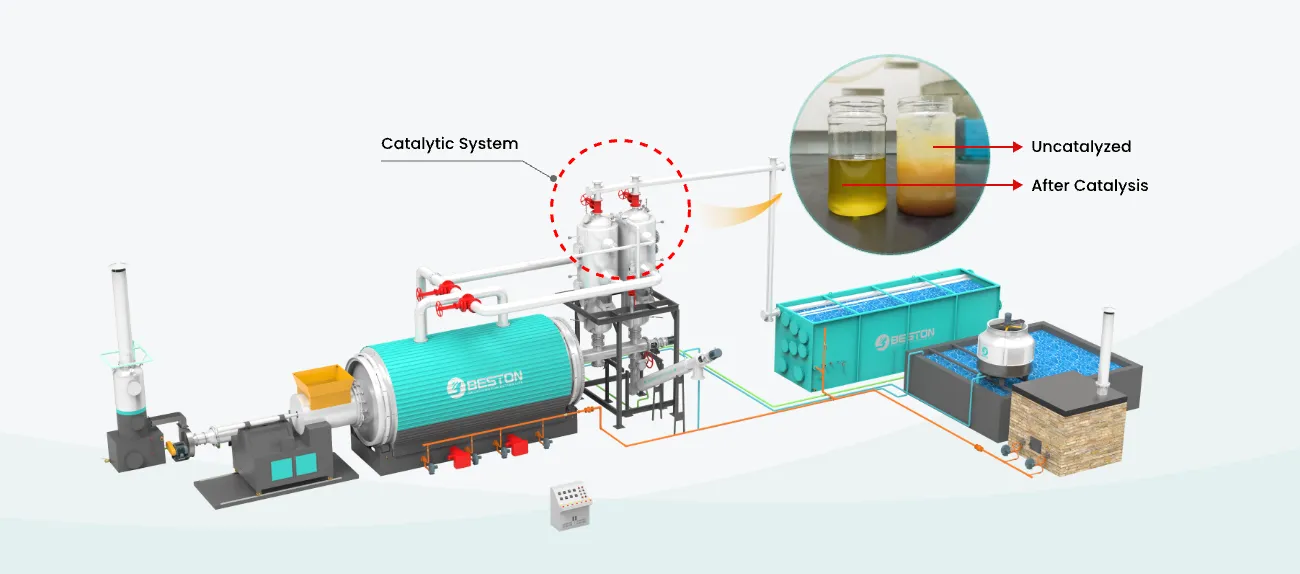
Plastic waste is one of the most pressing environmental challenges today, given its non-biodegradable nature and widespread use. As plastic accumulation continues to increase, traditional disposal methods such as landfilling and incineration prove insufficient, necessitating innovative solutions. Pyrolysis, a thermochemical process, has emerged as a promising technology for energy recovery from plastic waste. Through this method, plastic is converted into valuable fuels and chemicals, offering a sustainable pathway to mitigate plastic pollution while contributing to the circular economy.
How Pyrolysis Works
Pyrolysis involves heating plastic waste in the absence of oxygen to break down complex polymers into simpler, usable forms such as oil, gas, and solid char. This process typically occurs at temperatures ranging from 300°C to 800°C, depending on the type of plastic and desired end products. The energy released during this thermal degradation can be harnessed to fuel the process itself or be converted into alternative energy forms like electricity or heat.
Plastic pyrolysis plants are designed to optimize this transformation, converting non-recyclable plastic waste into usable fuels. These machines not only provide a method for disposing of plastic but also produce high-value outputs, such as pyrolytic oil, which can be further refined into diesel or gasoline. This has led to the development of various models, including the continuous plastic pyrolysis plant, which allows for uninterrupted operation, making it an efficient choice for large-scale waste-to-energy facilities.
Environmental Impact
The environmental benefits of using pyrolysis to manage plastic waste are significant. First and foremost, pyrolysis reduces the volume of plastic waste, helping to alleviate the burden on landfills and decrease the associated risk of pollution. Unlike incineration, which produces harmful emissions such as carbon dioxide and dioxins, pyrolysis operates in a controlled environment, ensuring minimal release of harmful byproducts. The gas produced during the process can be used as a renewable energy source, reducing reliance on fossil fuels and further contributing to carbon footprint reduction.
Additionally, the solid char produced during pyrolysis can be repurposed as a valuable material in industries such as construction, agriculture, and metallurgy. This multi-output nature of pyrolysis makes it an attractive waste-to-energy solution, offering a more circular approach to plastic waste management compared to traditional methods. This is also a factor that influences plastic to oil machine price.

Economic Viability
While the initial investment in a plastic pyrolysis plant can be substantial, the long-term economic benefits are undeniable. A plastic to fuel machine price varies depending on its capacity, efficiency, and technological advancements. Similarly, the plastic to oil machine price is influenced by factors such as the feedstock type and the desired quality of the end product. However, the financial return from selling the produced fuels, coupled with the reduced need for landfilling or incineration, often outweighs the initial setup costs.
For businesses considering large-scale operations, the continuous plastic pyrolysis plant offers an ideal solution. Its ability to process plastic waste in an ongoing manner allows for consistent fuel production, enhancing profitability. Furthermore, many plants are now equipped with advanced automation and monitoring systems, ensuring optimal performance and reducing operational costs.

Conclusion
The energy recovery potential of pyrolysis technology represents a transformative shift in how the world addresses plastic waste. By converting plastic waste into valuable fuels, plastic pyrolysis plant for sale not only help mitigate environmental pollution but also contribute to energy sustainability. As the demand for renewable energy solutions grows, the use of plastic pyrolysis plants continues to gain momentum, paving the way for a more sustainable future.
