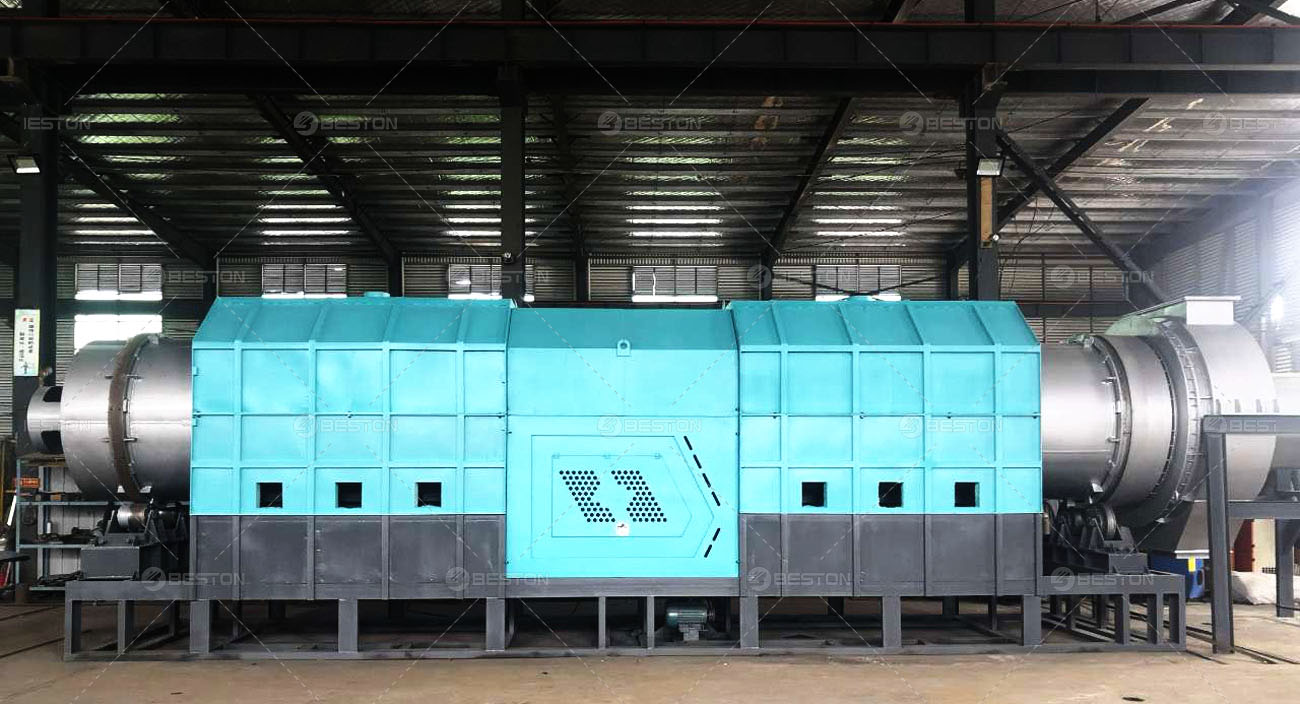
The biochar production equipment industry is moving from relatively simple carbonization technology toward more intelligent, efficient, and commercially integrated systems. Growing interest in carbon removal, soil improvement, biomass utilization, and circular resource management is creating new requirements for equipment manufacturers. Future development will not be defined solely by higher production capacity. Instead, equipment performance will increasingly depend on process control, energy efficiency, feedstock adaptability, product consistency, and carbon accounting.
1. Intelligent and Automated Process Control
Automation will become a defining characteristic of the next generation of biochar equipment. Conventional systems often rely on manual adjustments for feeding, temperature regulation, gas circulation, and discharge. This approach can create variability when feedstock characteristics change.
A modern biochar machine is expected to incorporate automated temperature monitoring, programmable control systems, sensor-based feedback, and centralized operating interfaces. Artificial intelligence and industrial data analytics may further improve process optimization by identifying relationships between moisture content, residence time, reactor temperature, and biochar properties. The objective is straightforward: stable operation with fewer manual interventions.
2. Higher Energy Efficiency and Thermal Integration
Energy consumption remains an important consideration in biochar production. Biomass pyrolysis requires controlled heating, but a significant portion of the energy demand can potentially be supplied by combustible pyrolysis gas generated during the process.
Future equipment will therefore place greater emphasis on thermal integration. A biochar pyrolysis machine may recycle pyrolysis gas as process fuel, recover heat from exhaust streams, and use insulated reactor structures to reduce thermal losses. Advanced combustion chambers and heat-exchange configurations can further improve energy utilization.
This shift transforms pyrolysis from a simple heating process into a more tightly coupled thermochemical system.

3. Greater Feedstock Flexibility
Biomass is inherently heterogeneous. Agricultural residues, forestry waste, bamboo, wood chips, coconut shells, rice husks, and other biomass materials differ substantially in moisture, density, ash content, and volatile composition.
A future biomass pyrolysis machine will need greater adaptability to these variations. Adjustable feeding systems, optimized residence times, flexible reactor configurations, and improved pretreatment technologies can help maintain stable operation across different feedstocks.
This flexibility is particularly important for decentralized projects, where locally available biomass determines the practical economics of production.
4. Modular and Distributed Equipment
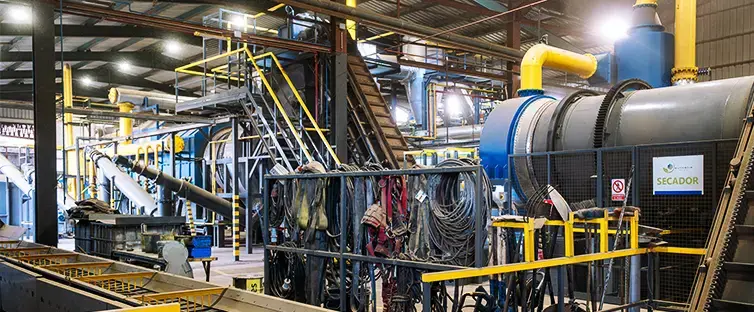
Large centralized plants will continue to serve high-volume feedstock streams, but modular equipment is likely to gain greater market relevance. Biomass is often geographically dispersed, and transporting low-density residues over long distances can undermine project economics.
Compact and modular biochar systems can be deployed closer to biomass sources. A biochar furnace designed with modular heating, feeding, and gas-treatment components can also simplify transportation, installation, and future capacity expansion.
This distributed model can reduce logistics costs while converting agricultural and forestry residues near their points of generation.
5. Improved Biochar Quality and Standardization
As biochar enters agricultural, environmental, and carbon-removal markets, product consistency will become increasingly important. Buyers may evaluate parameters such as carbon content, stability, ash content, pH, moisture, surface characteristics, and contaminant levels.
Consequently, equipment development will increasingly focus on precise temperature management and repeatable residence-time control. The relationship between operating parameters and final biochar characteristics will become a central engineering consideration.
Production equipment will therefore evolve from merely producing carbonized biomass to producing a more predictable and measurable carbon material.
6. Integration with Carbon Removal Projects
Carbon markets are likely to exert considerable influence on equipment design. Biochar projects increasingly need reliable data concerning feedstock origin, processing conditions, biochar yield, carbon content, and operational performance.
Future systems may integrate digital monitoring and traceability platforms directly into the production line. Such infrastructure can facilitate project verification, improve operational transparency, and support carbon-removal accounting.
In this context, equipment becomes more than a physical production asset. It becomes part of the project’s broader measurement and verification architecture.
7. Cleaner Emissions and Greater Environmental Compliance
Environmental performance will remain a major development priority. Future systems are expected to incorporate more sophisticated gas treatment, combustion optimization, dust removal, and emission monitoring technologies.
The industry is consequently moving toward a more comprehensive approach in which energy recovery, emission control, material utilization, and carbon retention are considered simultaneously.
Conclusion
The future of the biochar production equipment industry will be characterized by automation, thermal efficiency, feedstock flexibility, modularity, product standardization, and carbon-data integration. The most competitive equipment will not simply produce biochar at scale. It will operate with greater precision, consume energy more efficiently, accommodate diverse biomass resources, and generate reliable operational data.
As biochar develops from a niche biomass product into a component of circular economy and carbon-removal strategies, production equipment will become increasingly sophisticated. The technological trajectory is clear: from basic carbonization toward intelligent, integrated, and commercially verifiable thermochemical processing.
